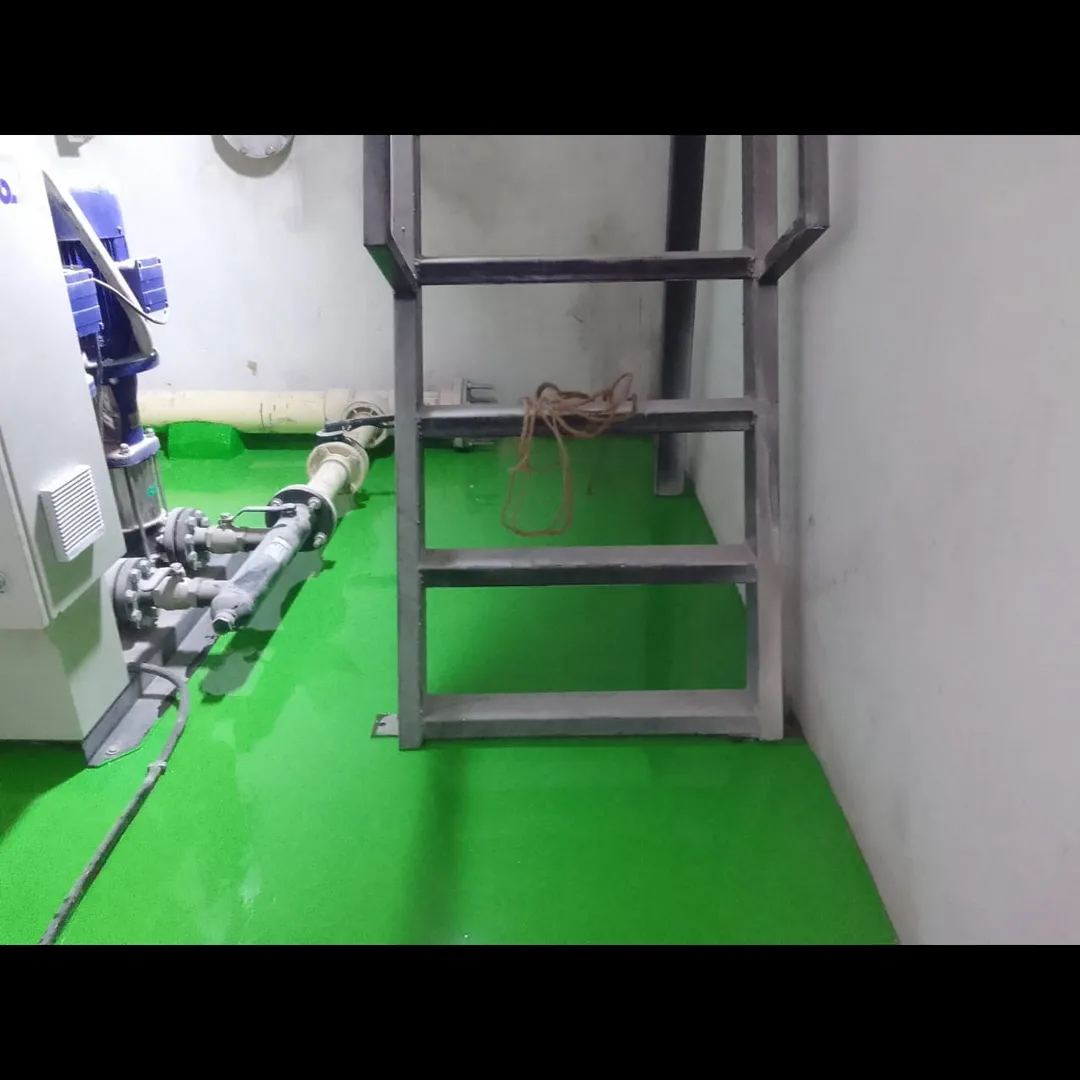
Epoxy flooring : Here is a detailed overview of Epoxy Flooring, covering everything from composition to installation and maintenance:
🔹 What is Epoxy Flooring?
Epoxy flooring is a surface system created by applying multiple layers of epoxy resin over a floor surface, typically concrete. Epoxy is a thermosetting polymer that cures when its two components — epoxy resin and hardener — are mixed. Once cured, it forms a strong, durable, and chemically resistant floor.
🔸 Components of Epoxy Flooring
ComponentDescriptionEpoxy ResinBase material that provides the coatingHardener (Catalyst)Reacts with the resin to form a hard, durable surfaceAdditivesPigments, textures, aggregates (e.g., sand, flakes, quartz), anti-slip agents
🔸 Types of Epoxy Flooring
TypeDescriptionApplicationsSelf-Leveling EpoxySmooth, seamless, fills minor cracksIndustrial, commercialMortar EpoxyThick, sand-filled, extremely durableFactories, heavy-duty zonesQuartz EpoxyDecorative, with quartz sandHospitals, bathroomsMetallic EpoxySwirled pigments for artistic finishHomes, showroomsFlake EpoxyColored flakes in base coatGarages, locker roomsAntistatic Epoxy (ESD)Prevents static dischargeElectronics, cleanrooms
🔸 Typical Layer Structure
- Concrete Substrate – Base surface (cleaned and repaired)
- Primer Coat – Promotes adhesion and seals surface
- Epoxy Base Coat – Main structural and chemical-resistant layer
- Decorative Layer – Optional (flakes, quartz, metallic pigments)
- Topcoat (Sealer) – Protective layer against UV, wear, chemicals
🔸 Installation Process
- Surface Preparation
- Grinding or shot blasting
- Crack filling and leveling
- Priming
- Applied to increase adhesion
- Mixing and Applying Epoxy
- Combine resin and hardener
- Apply with roller or trowel
- Broadcast Aggregates or Flakes (if needed)
- Topcoat Application
- For gloss, UV protection, and durability
- Curing
- Light traffic: 12–24 hours
- Full cure: 3–7 days
🔸 Performance Characteristics
PropertyValueThickness1 mm to 5+ mmLifespan5–10+ years (with maintenance)Compressive Strength50–90 MPaChemical ResistanceHigh (customizable by formulation)Slip ResistanceCan be enhanced with additivesGloss LevelGlossy, matte, satin
🔸 Advantages
- Seamless and easy to clean
- Resistant to chemicals, oil, water, and abrasion
- Aesthetic flexibility (color, texture, effects)
- Enhances concrete strength and durability
🔸 Disadvantages
- Slippery if not textured
- Requires professional application
- Surface prep is critical to avoid peeling
- UV exposure can yellow some types (unless UV-stable)
🔸 Common Uses
- Industrial: Warehouses, plants, factories
- Commercial: Stores, hospitals, showrooms
- Residential: Garages, kitchens, basements
- Institutional: Schools, laboratories, clinics
🔸 Maintenance Tips
- Regular dust mopping or vacuuming
- Damp mopping with pH-neutral cleaner
- Avoid harsh chemicals unless compatible
- Inspect periodically for wear or cracks
Email : www.bechennai.com, Mobile no : 888 333 33 22.
Keywords