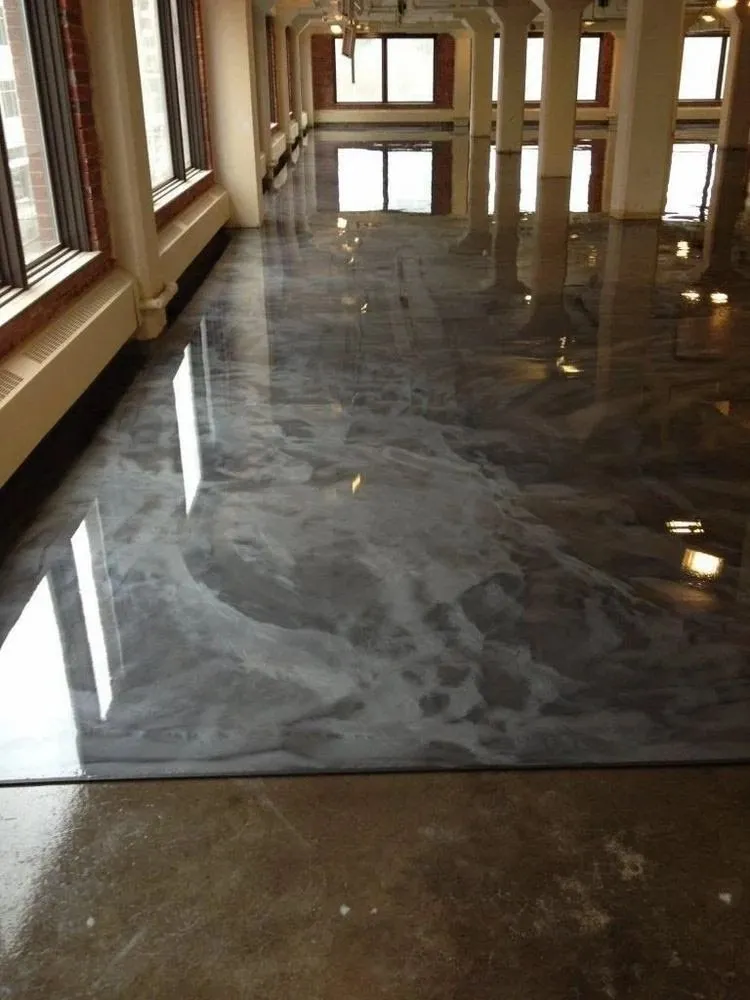
EPOXY FLOORING:poxy flooring is a popular choice for both residential and commercial spaces due to its durability, aesthetic appeal, and ease of maintenance. Here’s a comprehensive overview:
Benefits of Epoxy Flooring:
Durability:
- Resistant to heavy traffic, impacts, and abrasions.
- Long-lasting and can withstand harsh chemicals, making it ideal for industrial settings.
Aesthetic Versatility:
- Available in various colors and finishes, including glossy, matte, and metallic options.
- Can incorporate decorative flakes or quartz for added visual interest.
Easy Maintenance:
- Smooth surface makes cleaning simple; spills can be wiped up easily.
- Resistant to stains and moisture.
Safety:
- Can be formulated with anti-slip additives for enhanced safety in wet areas.
- Provides a seamless surface that reduces the risk of cracks and crevices where dirt can accumulate.
Cost-Effectiveness:
- Compared to other flooring materials, epoxy can be more economical over its lifespan due to its durability and low maintenance needs.
Common Applications:
- Residential Garages: Provides a tough surface that can withstand oil spills and heavy vehicles.
- Commercial Spaces: Used in showrooms, retail stores, and warehouses for its durability and clean appearance.
- Industrial Facilities: Ideal for factories, manufacturing plants, and laboratories where chemicals and heavy machinery are present.
- Hospitals and Laboratories: Offers a hygienic surface that is easy to clean.
Installation Process:
Surface Preparation:
- Clean and repair the concrete substrate. This may involve grinding or shot blasting to create a rough surface for better adhesion.
Moisture Testing:
- Check for moisture levels in the concrete. High moisture can affect the adhesion and performance of epoxy.
Priming:
- Apply a primer to improve bonding between the epoxy and the concrete.
Mixing the Epoxy:
- Follow the manufacturer’s instructions for mixing the epoxy resin and hardener.
Application:
- Pour the mixed epoxy onto the floor and spread it using a roller or squeegee.
- If desired, add decorative flakes or quartz while the epoxy is still wet.
Curing:
- Allow the epoxy to cure fully as per the manufacturer’s guidelines. This can take anywhere from a few hours to several days, depending on the product and environmental conditions.
Sealing (if necessary):
- Some applications may require an additional sealant for extra protection.
Maintenance:
- Regular sweeping and mopping to keep the surface clean.
- Avoid harsh chemicals; mild detergents are usually sufficient.
- Address any spills promptly to prevent staining.
If you have specific questions about epoxy flooring or need guidance on a particular project, feel free to ask!
Keywords