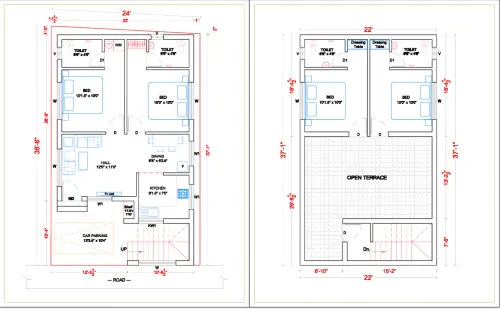
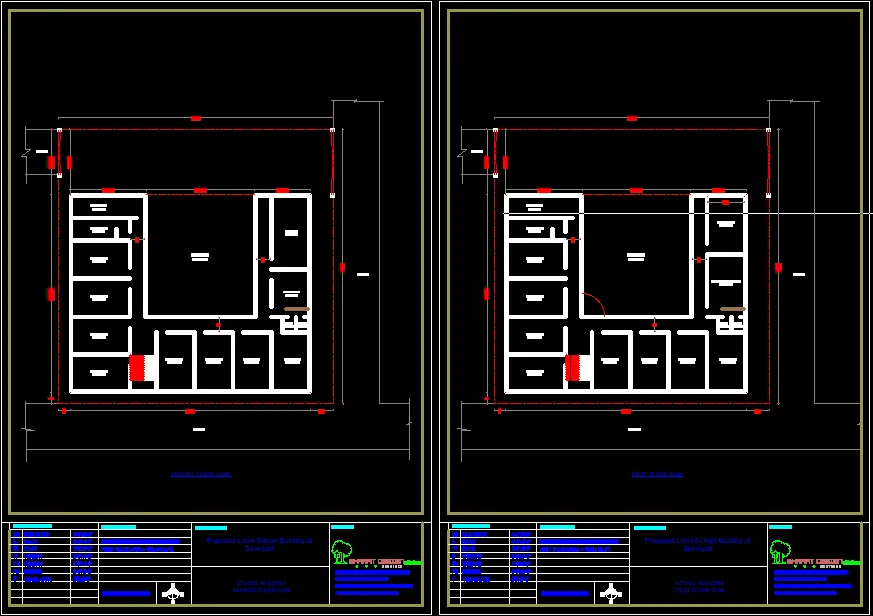
School building basic plan : Designing a school building is a comprehensive project that requires attention to several key factors, such as functionality, safety, accessibility, and compliance with building codes. Below are the key components of a school building plan and layout, including the essential details that should be included in the working drawing:
1. Site Plan and Layout:
Location of the School: On the site, showing the orientation, boundaries, and access points.
Building Placement: Proper positioning of the building on the lot for optimal use of space and safety.
Parking Areas: For teachers, staff, and visitors, and the location of drop-off/pick-up zones.
Outdoor Areas: Playground, sports fields, and outdoor classrooms.
Landscape Elements: Trees, walkways, and outdoor seating areas.
2. Building Layout:
Floors and Dimensions: Include the number of floors and specific measurements for each area of the building.
Entrance and Lobby: Main entry, reception area, and security check-in points.
Classrooms: Specific dimensions for each room, layout for furniture, and the number of students per room (including special rooms like science labs, art rooms, and computer labs).
Restrooms: Placement and number of restroom facilities for students, staff, and guests.
Administrative Offices: Location of the principal’s office, counselor’s office, and administrative support.
Library: Designated space for the library, including reading areas and shelving.
Multipurpose Room (Gymnasium or Auditorium): For assemblies, physical education, and extracurricular activities.
Cafeteria: Including kitchen facilities, serving areas, and seating arrangements.
Storage Areas: For supplies, equipment, and cleaning materials.
3. Structural Details:
Foundation and Floor Systems: Type of foundation (slab, crawlspace, or basement) and floor construction (reinforced concrete, wood framing, etc.).
Walls and Partitioning: Type of wall construction, including load-bearing walls and partitions between classrooms and other rooms.
Roofing System: Design of the roof, materials, insulation, and drainage (flat or sloped roofs).
Window and Door Placement: Size, type, and location of windows and doors to maximize natural light and provide safety.
Ceiling Heights: Standard ceiling height and any variations for specialized areas (e.g., gym or auditorium).
4. MEP (Mechanical, Electrical, Plumbing) Systems:
HVAC (Heating, Ventilation, and Air Conditioning): Placement of vents, ducts, and air conditioning units.
Lighting Systems: Detailed lighting layout for classrooms, hallways, and outdoor spaces.
Power Supply and Outlets: Placement of electrical outlets, switches, and dedicated circuits for special equipment.
Plumbing System: Layout of water supply and drainage, including sinks, toilets, and drinking fountains.
Fire Alarm and Emergency Systems: Placement of fire alarms, sprinkler systems, and emergency exits.
5. Safety and Accessibility:
Emergency Exits: Clearly marked and easily accessible evacuation routes and exits.
Fire-rated Doors and Walls: Specific areas that require fireproofing for safety.
Accessible Design: Compliance with accessibility standards (ADA or local equivalents), including ramps, wide doorways, and accessible restrooms.
Security Features: Surveillance cameras, controlled access points, and security staff stations.
6. Sustainability and Environmental Considerations:
Energy-efficient Design: Use of energy-efficient lighting, insulation, windows, and HVAC systems.
Water Conservation: Low-flow plumbing fixtures and rainwater harvesting systems, if applicable.
Green Spaces and Natural Light: Design elements that promote student well-being, such as outdoor classrooms, green roofs, and natural lighting.
7. Furniture and Equipment Layout:
Classroom Furniture: Desk, chair, and storage arrangements for each classroom.
Technology Setup: Integration of computers, projectors, and interactive whiteboards in classrooms, labs, and common areas.
Cafeteria Layout: Tables and seating arrangements, including spaces for serving food.
8. Building Code Compliance:
The school building must meet local and regional building codes, zoning laws, and educational facility guidelines. These might include:
Fire Safety Code: Fire exits, alarm systems, and fire-resistant materials.
Health and Safety Standards: Proper ventilation, lighting, and sanitation.
9. Sample School Layout (Illustrative):
Ground Floor:
Entrance Lobby / Reception Area
Main Hallways connecting classrooms
Administrative Offices (Principal, Staff Rooms)
Multipurpose Room (Gymnasium or Auditorium)
Cafeteria and Kitchen
Restrooms
Upper Floors (if applicable):
Classrooms, Science Labs, Art Rooms, etc.
Library and Computer Labs
Restrooms
Storage Rooms
Would you like a specific school building design with measurements and layout details, or a more detailed guide on how to prepare plans for a school building? Let me know what type of drawing or design you need, and I can provide a more focused plan! www.chennai.com. Mobile no: 888 333 33 22.
1. Site Plan and Layout:
Location of the School: On the site, showing the orientation, boundaries, and access points.
Building Placement: Proper positioning of the building on the lot for optimal use of space and safety.
Parking Areas: For teachers, staff, and visitors, and the location of drop-off/pick-up zones.
Outdoor Areas: Playground, sports fields, and outdoor classrooms.
Landscape Elements: Trees, walkways, and outdoor seating areas.
2. Building Layout:
Floors and Dimensions: Include the number of floors and specific measurements for each area of the building.
Entrance and Lobby: Main entry, reception area, and security check-in points.
Classrooms: Specific dimensions for each room, layout for furniture, and the number of students per room (including special rooms like science labs, art rooms, and computer labs).
Restrooms: Placement and number of restroom facilities for students, staff, and guests.
Administrative Offices: Location of the principal’s office, counselor’s office, and administrative support.
Library: Designated space for the library, including reading areas and shelving.
Multipurpose Room (Gymnasium or Auditorium): For assemblies, physical education, and extracurricular activities.
Cafeteria: Including kitchen facilities, serving areas, and seating arrangements.
Storage Areas: For supplies, equipment, and cleaning materials.
3. Structural Details:
Foundation and Floor Systems: Type of foundation (slab, crawlspace, or basement) and floor construction (reinforced concrete, wood framing, etc.).
Walls and Partitioning: Type of wall construction, including load-bearing walls and partitions between classrooms and other rooms.
Roofing System: Design of the roof, materials, insulation, and drainage (flat or sloped roofs).
Window and Door Placement: Size, type, and location of windows and doors to maximize natural light and provide safety.
Ceiling Heights: Standard ceiling height and any variations for specialized areas (e.g., gym or auditorium).
4. MEP (Mechanical, Electrical, Plumbing) Systems:
HVAC (Heating, Ventilation, and Air Conditioning): Placement of vents, ducts, and air conditioning units.
Lighting Systems: Detailed lighting layout for classrooms, hallways, and outdoor spaces.
Power Supply and Outlets: Placement of electrical outlets, switches, and dedicated circuits for special equipment.
Plumbing System: Layout of water supply and drainage, including sinks, toilets, and drinking fountains.
Fire Alarm and Emergency Systems: Placement of fire alarms, sprinkler systems, and emergency exits.
5. Safety and Accessibility:
Emergency Exits: Clearly marked and easily accessible evacuation routes and exits.
Fire-rated Doors and Walls: Specific areas that require fireproofing for safety.
Accessible Design: Compliance with accessibility standards (ADA or local equivalents), including ramps, wide doorways, and accessible restrooms.
Security Features: Surveillance cameras, controlled access points, and security staff stations.
6. Sustainability and Environmental Considerations:
Energy-efficient Design: Use of energy-efficient lighting, insulation, windows, and HVAC systems.
Water Conservation: Low-flow plumbing fixtures and rainwater harvesting systems, if applicable.
Green Spaces and Natural Light: Design elements that promote student well-being, such as outdoor classrooms, green roofs, and natural lighting.
7. Furniture and Equipment Layout:
Classroom Furniture: Desk, chair, and storage arrangements for each classroom.
Technology Setup: Integration of computers, projectors, and interactive whiteboards in classrooms, labs, and common areas.
Cafeteria Layout: Tables and seating arrangements, including spaces for serving food.
8. Building Code Compliance:
The school building must meet local and regional building codes, zoning laws, and educational facility guidelines. These might include:
Fire Safety Code: Fire exits, alarm systems, and fire-resistant materials.
Health and Safety Standards: Proper ventilation, lighting, and sanitation.
9. Sample School Layout (Illustrative):
Ground Floor:
Entrance Lobby / Reception Area
Main Hallways connecting classrooms
Administrative Offices (Principal, Staff Rooms)
Multipurpose Room (Gymnasium or Auditorium)
Cafeteria and Kitchen
Restrooms
Upper Floors (if applicable):
Classrooms, Science Labs, Art Rooms, etc.
Library and Computer Labs
Restrooms
Storage Rooms
Would you like a specific school building design with measurements and layout details, or a more detailed guide on how to prepare plans for a school building? Let me know what type of drawing or design you need, and I can provide a more focused plan! www.chennai.com. Mobile no: 888 333 33 22.
Keywords