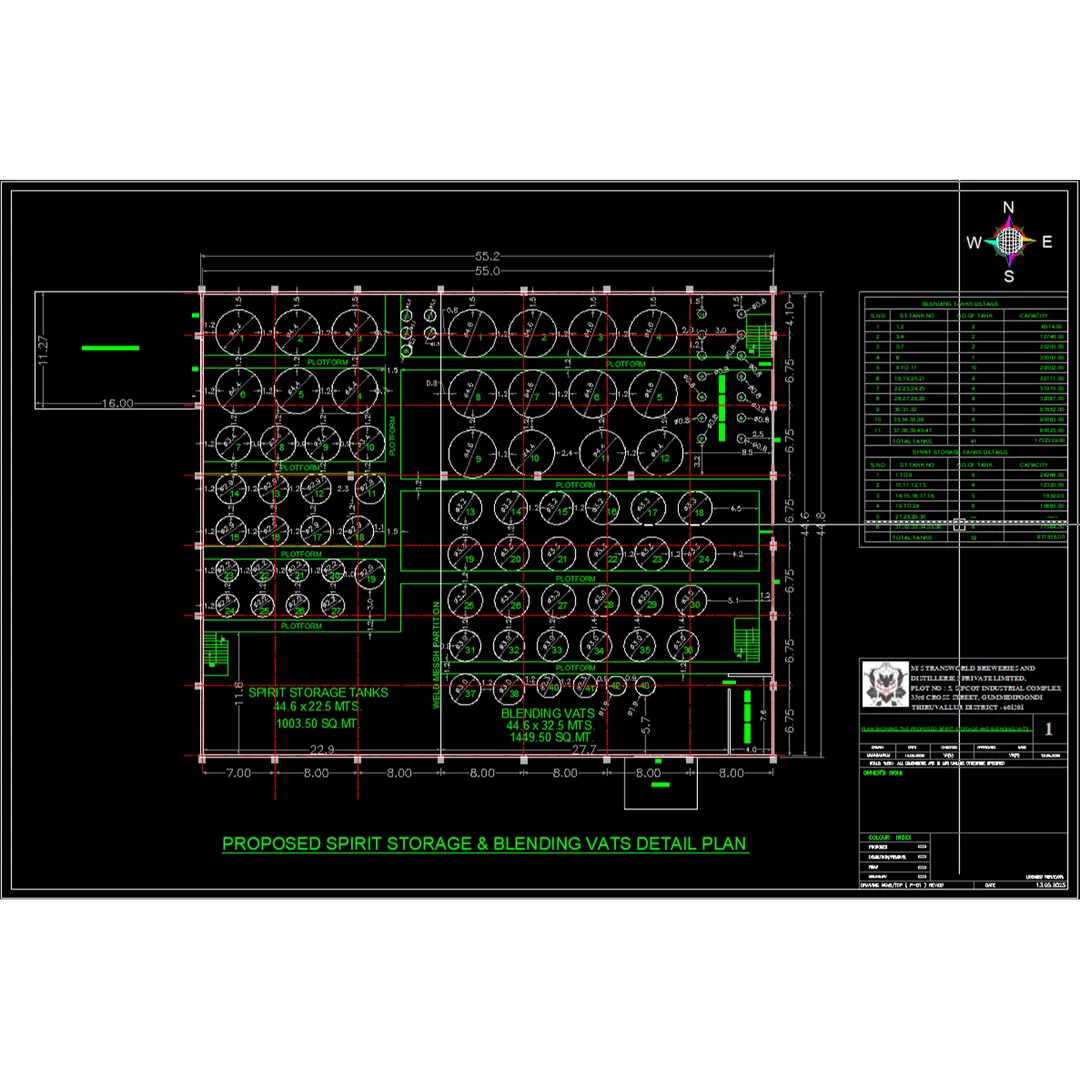
Spirit storage blending plan :
A Spirit Storage and Blending Plan is a detailed operational and compliance framework for managing the storage, handling, and blending of alcoholic spirits. It is particularly critical for distilleries, bonded warehouses, bottling plants, and other liquor-manufacturing facilities, and it must comply with legal, safety, and quality standards (e.g., excise laws, food-grade regulations).
Below are the key components of a Spirit Storage and Blending Plan:
🔹 1. Purpose of the Plan
Defines how spirits will be stored, blended, tracked, and handled to ensure product integrity, regulatory compliance, and operational efficiency.
🔹 2. Storage Area Details
a. Bonded vs Non-Bonded Storage
- Bonded Warehouses: Duty unpaid, under government supervision.
- Non-Bonded: Duty paid; usually used for finished products.
b. Tank/Vessel Specifications
- Material: SS316 or food-grade mild steel with internal coating.
- Capacity: Typically in kiloliters (KL).
- Numbered for identification (e.g., Tank T-01, T-02).
- Equipped with:
- Level gauges
- Temperature sensors
- Pressure relief valves
- Vents and flame arrestors
c. Storage Conditions
- Temperature-controlled if required (for certain products).
- Fire protection systems in place.
- Ventilation and spill containment.
🔹 3. Spirit Types & Inventory Tracking
- ENA (Extra Neutral Alcohol)
- Rectified Spirit
- Flavored Alcohol
- Blended/Matured Spirits
a. Identification & Labeling
- Each batch/tank should have unique batch IDs.
- Use barcoding/RFID for real-time tracking.
b. Daily Reconciliation
- Maintain daily inflow/outflow logs.
- Tank dips vs. ERP-based entries.
- Maintain stock registers for excise purposes.
🔹 4. Blending Plan Details
a. Blending Formula
- Define the recipe: % of ENA, water, flavorings, color, matured spirit, etc.
- Example:
- 65% ENA
- 33% Demineralized Water
- 2% Caramel & Flavor
b. Blending Tanks
- SS316 tanks with agitators for homogenization.
- Optional: Inline blenders for continuous blending.
c. Process Control
- Pre-blend quality check (QC of raw materials).
- Online sensors or batch QC.
- Blending logs for traceability.
🔹 5. Quality Control
- Lab analysis before and after blending.
- Test parameters:
- Alcohol strength (ABV)
- pH
- Methanol content
- Fusel oil
- Organoleptic testing (taste, odor, color)
🔹 6. Excise Compliance
- Maintain Daily Spirit Register (DSR)
- Entry and exit with bond officer permissions (if bonded)
- Proper sealing/unsealing logs
- Filing monthly/quarterly returns
🔹 7. Safety Measures
- Flameproof lighting
- No smoking zones
- Fire extinguishers and hydrant systems
- Alcohol vapor detectors
- Spill kits and emergency showers
🔹 8. Blending Scheduling and Capacity Planning
- Based on production schedule.
- Optimize tank usage to prevent contamination or idle time.
- Use software tools like ERP, MES, or manual Gantt charts.
🔹 9. Documentation and Records
- Blending sheets
- Batch records
- QA/QC reports
- Excise documentation
- SOPs for blending, cleaning, sampling
🔹 10. Optional Systems
- SCADA or PLC Automation for tank monitoring and blending control.
- ERP Integration for inventory and compliance (e.g., SAP, Oracle).
- Traceability systems for recall management.
Email : www.bechennai.com, Mobile no : 888 333 33 22.
Keywords